
How laser cleaning works.
Short pulses of laser light heat the dirt faster than the stone under it. The dirt lifts off as dust. The stone stays as it is.
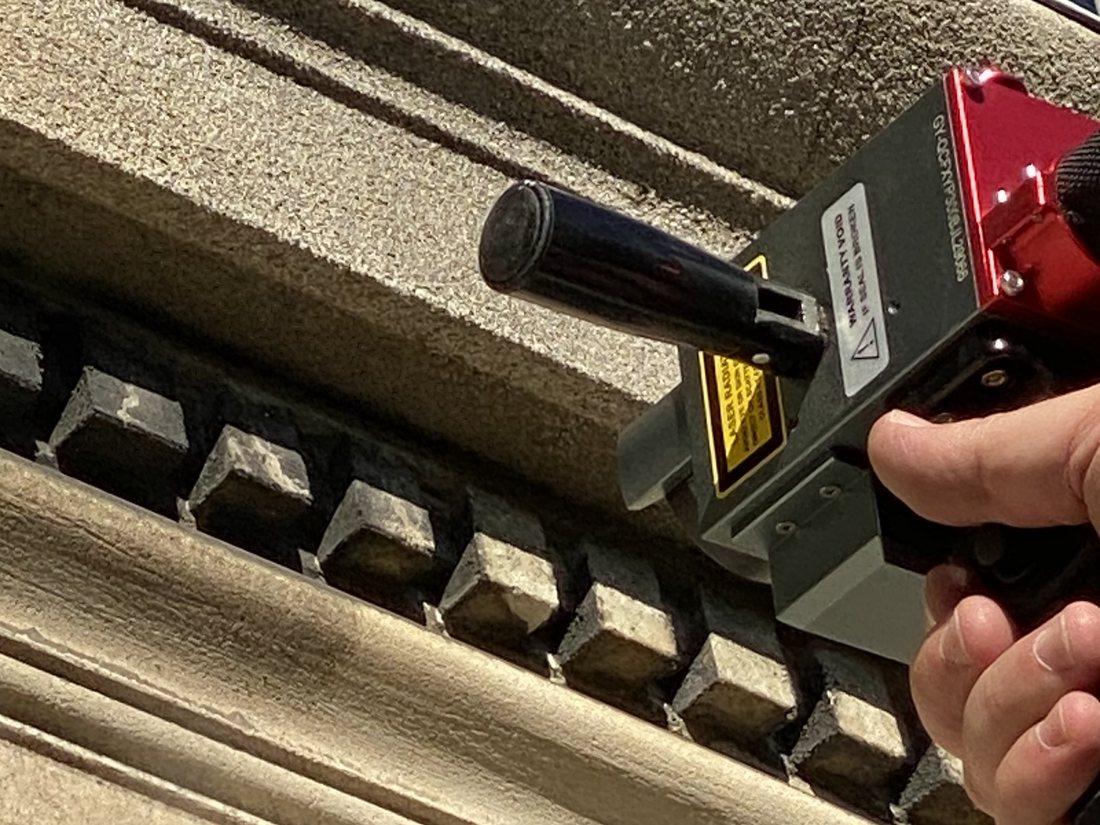
Soot absorbs the light.
Each pulse heats the dark layer in an instant, and the layer lifts off.
Pale stone reflects it.
Clean stone takes in far less energy, so the cleaning slows down.
Nothing is added.
No water, no chemicals, no sand. Nothing is left in the stone.
A limestone entrance, start to finish.
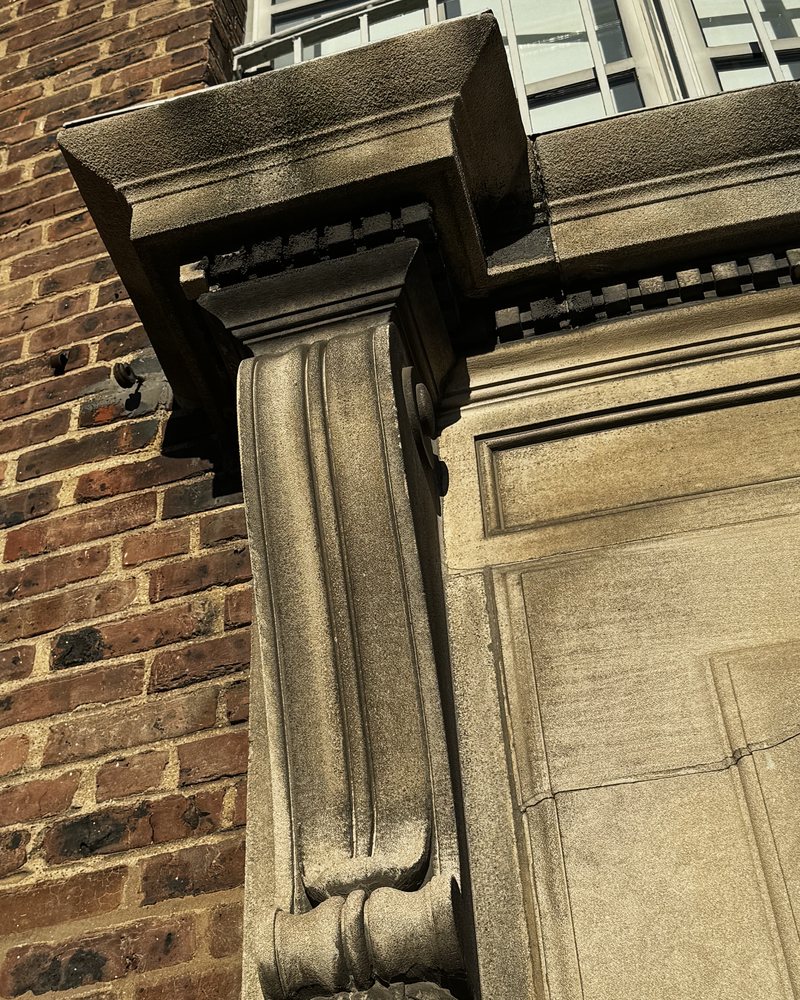
Decades of soot.
On the cornice, the carved garland and both of the brackets.
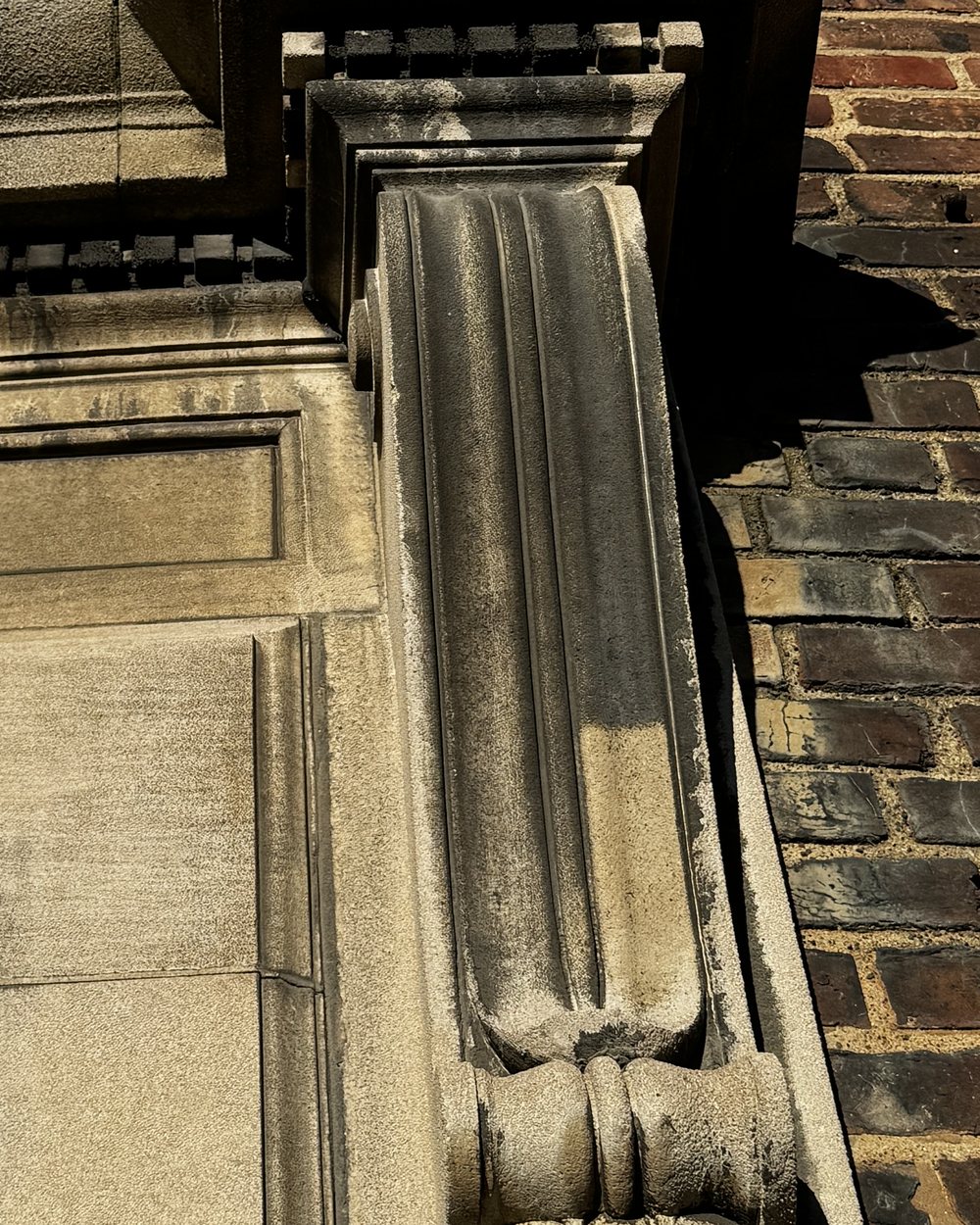
Settings come first.
We set power and speed on one small area before the rest.
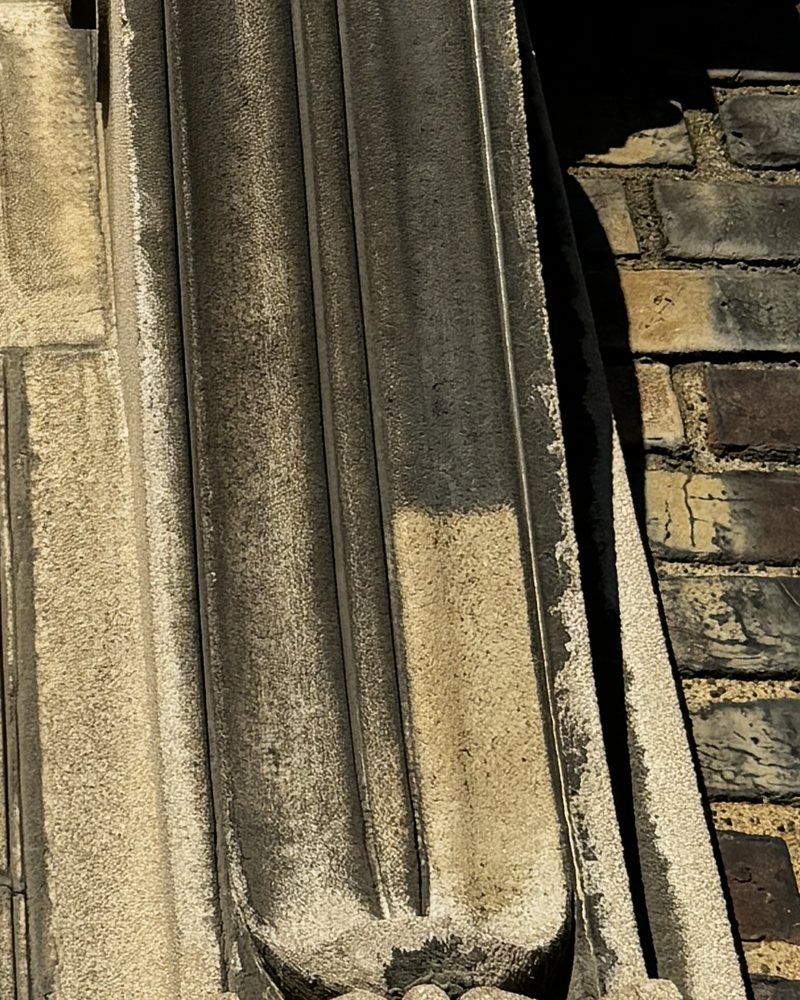
Then the flat stone.
The laser sweeps a narrow band, and the clean line moves with it.
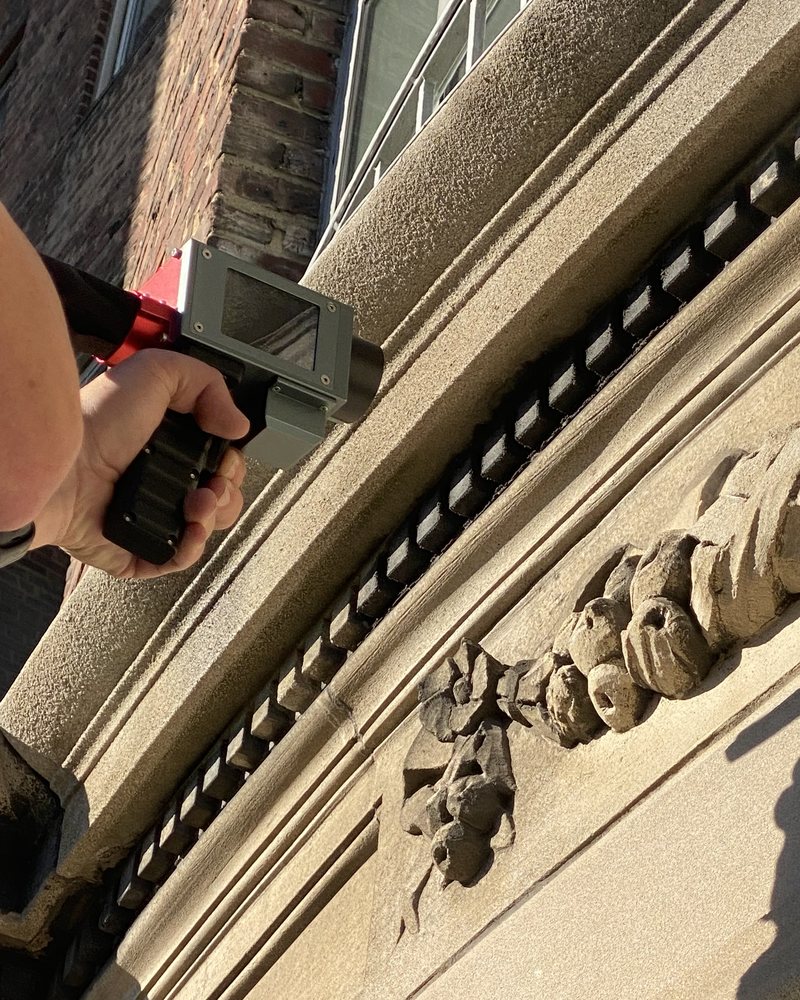
Slower on carving.
Several angles, so the light reaches every fold of the carving.
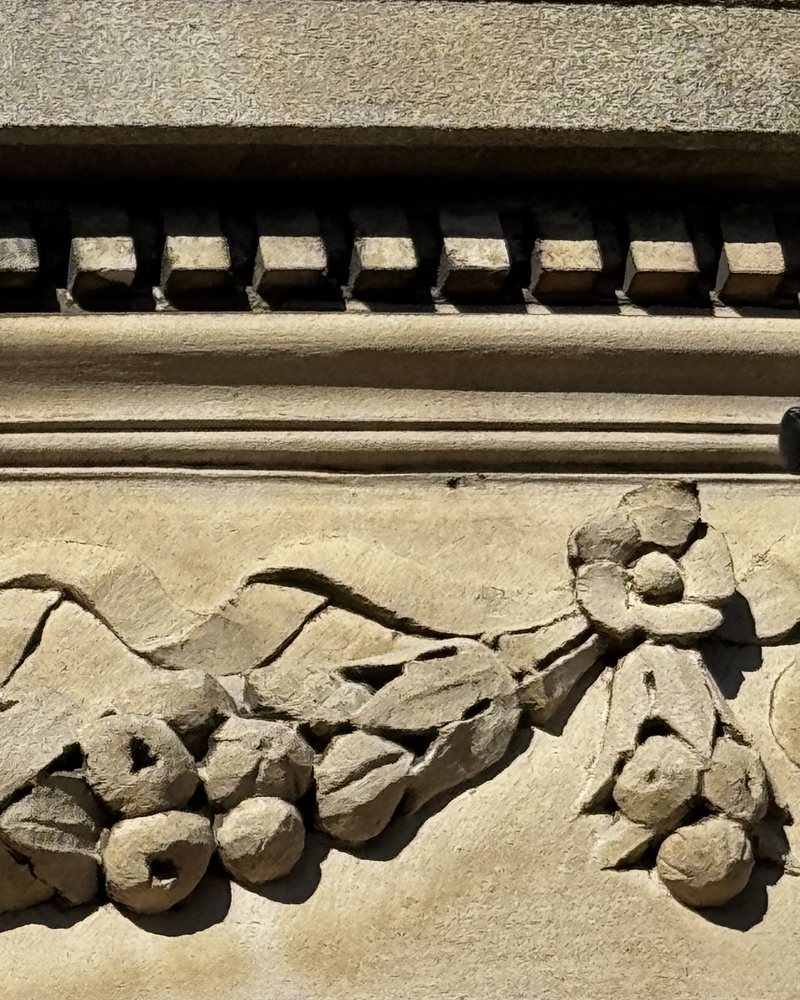
Edges stay sharp.
The small blocks under the cornice keep their square corners.
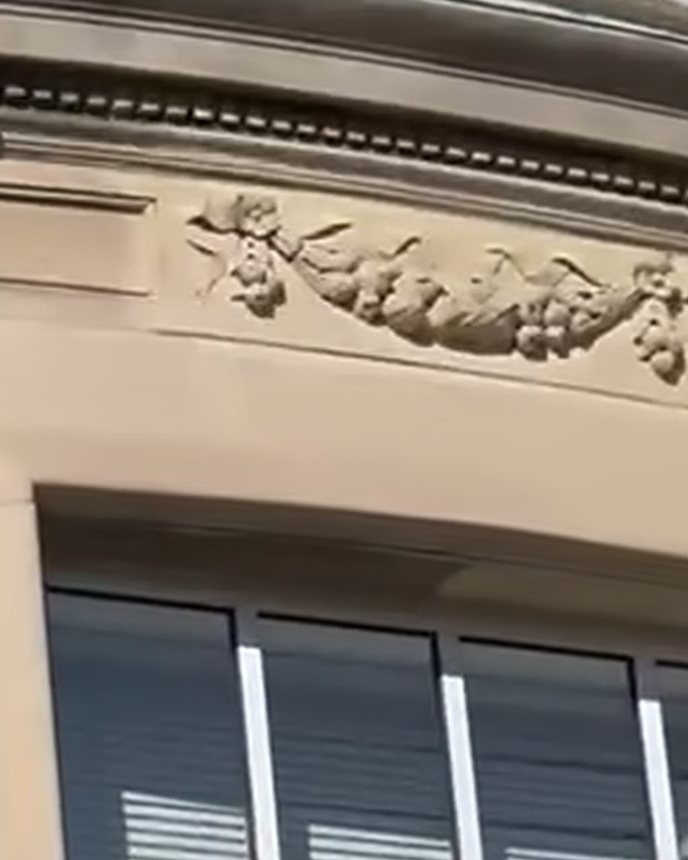
Clean stone.
The carved garland and the window surround after cleaning.
Safety on site.
Marked off
Signs and barriers around the work area.
Eyes protected
Laser safety glasses for anyone nearby.
Dry dust only
Soot comes off as fine, dry dust.
Nothing wet
No runoff leaves the work area.
Certified operator
New York State certificate, Class B.
Insured
$5 million in coverage.
Laser compared with other methods.
| Laser | Water or steam | Chemicals | Sandblasting | |
|---|---|---|---|---|
| What touches it | Light only | Water | Chemicals | Sand or grit |
| Leaves behind | Dry dust | Runoff | Residue, runoff | Grit and dust |
| Best for | Carving, fine detail, metalwork | Plain walls and whole facades | Specific stains and old coatings | Structural steel and concrete |
Architects and contractors: we work as a specialist subcontractor and can clean a sample area for approval.
Tell us about your building.
Send photos and a short description. We reply with a written proposal.